Showing posts with label books. Show all posts

Wednesday, October 21, 2015

You Should Read This, and This, and This

I'm now working from home two days a week--which is fabulous--but it is impeding the pace at which I get through my audiobooks. Cry me a river. The things I have to give up for work-life balance, I tell you what.

The balance of being in the office three days a week and out two is just about perfect for this introverted managing editor writer person. I swear traffic is getting worse headed into downtown Cleveland. People, stop living in the suburbs and taking jobs in the city! That's only for me to do. The rest of you should relocate to one of those swanky lakefront apartments and clear up I-77 between 7 and 8:30 every morning.

My hour and fifteen in the car every Tuesday, Wednesday, and Friday morning still gives me plenty of time to get through almost an audiobook a week, depending on the length and reading style of the author/narrator. I just finished Let's Discuss Diabetes with Owls by David Sedaris, which was hilarious. You should read it. Before that, I listened to Eve by Wm. Paul Young, the guy who wrote The Shack. It was a fascinating, magical, fanciful interpretation of the Creation story and the Fall. I wasn't as impressed with the writing as I was the imagination in this book. It was delightful and heartbreaking. You should read it.

Another book you should read is Big Magic by Elizabeth Gilbert, which opens up the doorway for people to be creative. Creativity isn't just for the pros or the degreed or the academics, it's for everyone! Boom! So go read this for a little inspiration to get out there and be creative with your bad self.

I mentioned Love Wins by Rob Bell last time, but I'm bringing it up again because, you should read it.

And before that, I read Origins: 14 Billion Years of Cosmic Evolution by Neil deGrasse Tyson, and you should only read it if you are okay not really understanding 2/3 of what is being said or you are an astrophysicist, in which case you won't have any trouble.

Before that, I read Food: A Love Story by Jim Gaffigan, because he's also super funny, and sometimes you need to laugh the entire way to work. You should read it.

You should also read Lila by Marilynne Robinson and Frankenstein by Mary Shelley. Also Knowing Your Value by Mika Brzezinski. And Falling Upward by Richard Rohr.

Oh, heck, just read the books. Expand your world and read the books. Look up and out and in and through and read the books. Read the books you would never read. Read the books that might challenge the way you think. Read the books that will help you see yourself new. Read the books that will make you more whole. Read the books that will make you laugh. Read the books that will kick you in the pants. You will be a better person. You will be a changed person. You will understand other people better. You will have more compassion. You will love more, feel more, think more, dream more. Read the books, people. Read all the books.

Off The Page Update

I just started a new series of four posts for Off the Page last week. They all have something to do with faith and doubt, two things that belong together but aren't usually talked about together. You can catch my first post, Becoming a 7-Day Creation Biblical Literalist, and follow along the next three Thursdays.

Previously on OTP, I thought a lot about prayer's role in the face of sickness and disease, specifically my dear friend, Marilyn's battle with breast cancer, in With Wordless Groans. I should read this one over and over again daily. Lately it feels like sorrow and grief are on every corner. The only way I can battle back the sadness is through prayer, and even then it's begging for comfort and joy, comfort and joy, comfort and joy. Sad is okay. It is necessary. But Lord, bring peace swiftly.

I also thought about how we measure our worth and the contradictions we face when wrestling with ambition, humility, confidence, jobs, and more, in How Much Am I Worth?

I hope you'll follow along with the series on doubt. I'm excited about what God and I discussed together as I worked through the writing process. I grew from it, and for that I am grateful.
Lake Michigan, Writers Retreat

Speaking and Teaching, WUT?
October proved to be a month for kickstarting the writing and teaching side of myself. I filled in for a friend at the Cleveland Museum of Art to teach a workshop on ekphrastic poetry at the beginning of the month. I traveled to beautiful coastal Michigan a couple weekends ago to spend some delicious time with writer friends and get some work done on a new poetry manuscript. I also started a writers' group at work, and we had our first meeting two weeks ago. I'm excited for the possibilities of camaraderie and encouragement there. And next weekend, I'm off to the Indiana Faith and Writing Conference to talk about Vulnerability in Writing. If you aren't going around scaring people for Halloween, perhaps you want to join me in Indiana Oct. 30 and 31? Li-Young Lee and my pal Scott Russell Sanders along with a whole host of poet friends are going to be hanging out together. It'll be totes amazing. Wut? (I don't know either.)

In Hindsight...
2014: Breaking the Workaholic
2013: Bad People Go to Hell and Other Parental Panic Moments
2012: The Elliptical and Tonight's Work of Writing
2011: Creativity in Worship
2010: Twelve Apples and a Blog
2009: That Crazy Thang Called "Plans"
2008: Baked Apples, Green Ogres, and Snuggles

Friday, June 12, 2015

The Desire to Be Desired

A couple of weeks ago was the River Teeth Nonfiction Conference, and leading up to that were lots of long nights getting ready. I've been feeling frustrated with my ability to make time for writing, here or anywhere else, but now that the conference is over and I've given my brain a little break from evening writing duties, I am ever hopeful that I can return to writing. I guess it's a season of scribbling notes on my iPhone notepad to get to later.

Well, I am writing, two blog posts a month for Off the Page, and I have a series of heron poems that keep coming to me like little mercies. I've been enjoying the blog posts I'm writing for Off the Page, but it is a different kind of writing than essaying. It's the essaying I miss right now. When I was whining about this to my friend Tania a couple weeks before the conference, she told me, "What, you can't write for the next 14 days? Big deal!" and grant yourself the space and permission not to write for now. I'm pretty sure that's what she said. So, okay, stop whining. There are worse things in the world than not writing for a small stretch of time.

Watching the Cavs game
In other news, it's SUMMER and baseball season. We spend a solid four to five nights a week at someone's baseball or softball game right now, and I loooooove it. There's nothing like sitting outside in late summer afternoons, the pace of a ballgame, an excuse to do nothing but enjoy the evening... ah. I love it. Have I mentioned that I love it?

We're also letting the kids - especially Elvis and Lydia - stay up a bit later now that it's summer, and they've been staying up to at least the half for the Cavs games the last two weeks. It's been fun spending that additional downtime with the two of them, even though it's intruding on my alone time with Brandon, which is always so guarded. Lydia sat on my lap last night for part of the game and now stretches out almost as long as I am. They are amazing people.

What I've been listening to:
I just finished up two books by Bill Bryson - At Home and In a Sunburned Country. I almost started One Summer and then changed my mind. There's only so much of the same voice reading to you that you can take. I loved both books. They were engaging and funny and informative. Before that I listened to Small Victories by Anne Lamott and LOVED it. I'll probably go back to Lamott again soon because she's so funny and tear-inducing, and I like that kind of writing.

I shifted gears and started listening to Gilead by Marilynne Robinson. For some reason it isn't at all what I thought it would be, but I also don't know exactly what I was expecting, so there's that. I'm really enjoying the switch to fiction for a spell, and I love the narrator's voice, the epistolary nature of the writing, and the gradual unfolding of the story. It's no wonder it won a Pulitzer.

What I've been up to:

If you are into Jo Ann Beard or you want to be, you might enjoy the presentation that Jill Christman and I did at the River Teeth Conference: "Negotiating the Plasmapause: Patterned Images, Delayed Revelation, and Sheer Awesomeness in Jo Ann Beard's The Boys of My Youth"

The series for Off the Page I mentioned in my last post, The Desire to Be Desired, has wrapped up. Here they are in summary with links to the full posts:

The Desire to Be Desired
I ran as fast as I could through the wood chips and up the wooden steps and beckoned from the highest point of the playground equipment. “You can’t catch me!” I shouted, grinning and staring down into the faces of Nick Germano and Jason Ream, and when they motioned for the steps, I squealed and giggled, sliding half-way down the stainless steel slide, its hot metal burning my hands and thighs. I stopped and waited to see which way they chose to go so I could make my break-away run, away from my chasers.


So went every day on the playground in first grade, then second, then third, sometimes different boys, eventually new playgrounds, but always the same game. Tag, freeze tag, TV tag, hide-and-go-seek tag, You can’t catch me! No one wanted to be caught, not really, anyway. What would you do when you were caught? That was the end of the game, the end of the chase. The thrill was in the running, the pursuit, the simple and potent knowledge that someone sought to catch you. Read More...

What Good Guys Do
One night, my husband and I were out at a country line-dancing bar. He got up to pay our tab and I watched the couples waltz on the floor.

“Hey, how ya doin’?” a voice came up from behind. I turned on my barstool and grinned at a guy obviously looking for a dance partner.

“I’m fine!” I said cheerily. He glanced down at my hand resting on the bar.

“Oh, you’re married!” he said, his arms flinging up in the air into the “I surrender” position. “I’m sorry!”

I nodded, still grinning as he walked away and Brandon came back. They exchanged glances, the guy smiling meekly and my husband giving him a nod of acknowledgement.

“Ready to go, Tiny Dancer?” Brandon asked.

“That guy was trying to hit on me!” I said with astonishment.


“Yeah, I figured,” he said, wrapping his arm around my waist and guiding me toward the door. I continued grinning, the warmth of admiration and the heat of my husband’s palm on the small of my back making me glow faintly on the way to the car. Read More...

Empty Houses
It has been three years since I sat in a dark bar on the dark side of town alone with a colleague, out for a drink to talk about writing and family and his failing marriage. It has been three years since he confessed to having a crush, his hand flitting like a fly on and off of my thigh. Three years since I laughed and blushed, stunned to be so openly admired by someone other than my husband. I didn’t know how to handle this advance, how to stand and stare down disaster before it could take root.

Instead, I wanted to be nice. I didn’t want to hurt his feelings. My “no” was mushy and clouded with desire—not for this other man but for this other man’s words, this other man’s advances, the unabashed expression of his desire for me. Me! Goofy and ridiculous me, flabby around the middle me, mother of three, me! “But I love my husband,” I said, again and again, with a grin, because I also loved to hear how beautiful this other man found me, how lovely, how smart, how good.


I would like to say that I stood up and slapped him. After all, he had just shook hands with my husband in our living room, just stood in the presence of all our wedding pictures and smiling faces of our children. I would like to say that I insisted he drive me home, immediately. I would like to say that every email conversation and text message from there on was strictly professional and never slid slyly into flirtatious, that I reported his advances to my supervisor and ended it, ended the confusing, terrifying, anxiety-inducing friendship and work relationship. But I didn’t. Read More...

The Directions Desire Can Take Us
It’s tempting to conclude this series on desire with the pattest of pat answers: If I were truly holy and pursuing God, this fire would be quenched and I would never again face the dichotomy of flesh and spirit, as if my body is evil and my spirit is good.

Except God made me, body and spirit. Adam needed a helpmate and so he was given Eve, before the Fall, before separation from God. Sarah needs a helpmate and so she is given Brandon.

We are made for connection, with God and with others. This connection is rooted in two things: Love the Lord your God with all your heart, with all your soul, and with all your mind; and love your neighbor as yourself.


If God is love and we learn to love God by watching Jesus, then loving our neighbors as ourselves is one of the only ways we can express and experience that love for ourselves. It’s a give-and-get kind of relationship, a pay it forward, a pouring out to be filled again and again. Read More...

Back then --
2014: Holiday Greetings from Nine-Month-Contract Land
2013: Why Do We Need Men?
2012: Corrective Lenses and Parenting
2011: In the Center Ring: Motherhood vs. Work
2010: Maybe She's Born With It...
2009: Potty Training Adventures


Tuesday, March 24, 2015

War and Peace and Devotion and David and Goliath

At the beginning of the year, I set a goal to read 12 books in 2015. That's one a month - totally reasonable, I figured. I like to read.

That was before I discovered audiobooks.

I finished two books yesterday - Devotion by Dani Shapiro and War and Peace by Leo Tolstoy. I've always wanted to read Russian novels but never took a Russian lit class where they were required, and the heft and weight of books like War and Peace intimidated me. Who has time to read War and Peace, and how good is it really? War, after all. I don't like war.

I loved War and Peace. I loved its characters and its ebb and flow between scene and dialogue and essayistic reflections on war and human nature, I loved Tolstoy's astute assessments of character and the inner workings of men and women, I loved the relationships and the interactions and the "tragic humor" of Russians, I loved it soo much I didn't want to get out of the car after my commute to and from work. I am so happy for the characters in the novel and so sad that it's over.

I started listening to Devotion by Dani Shapiro when for two whole days, I couldn't renew War and Peace. I also loved Devotion, which is not a Russian novel, but we can't ALL be Leo Tolstoy, amIright or amIright? I loved Devotion for its honesty and self-exploration, for its wrestling with matters of faith and its resolution without resolution, for Shapiro's sincerity of pursuit and her desire to comprehend matters of faith and devotion in the midst of suffering and uncertainty.

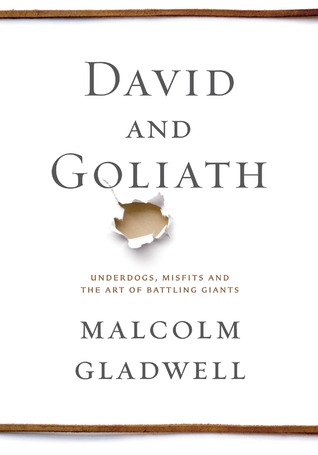
This morning, I began listening to David and Goliath by Malcolm Gladwell, and I am loving that, too, already. I love books. Books books books, all day, reading reading reading. With my usual hour or so commute, plus a ten minute walk to and from my car during which I continue listening to whatever I'm listening to currently, I get in a solid 140 minutes of "reading" a day.

This gives me about 700 minutes a week of reading time, a little under 11 hours each week. Gladwell and Shapiro's books are each about 7 hours long, which means I could conceivably finish at least a book a week this year, so long as I don't sign up for many more Russian novels (the unabridged War and Peace clocked in at a mere 61 hours).

Twelve books in 2015. Psha.

What I love about books - all books, whether novel or self-help or spiritual or nonfiction or poetry - is the power they have to make me a different person. By reading these stories and listening to these people share their personal accounts or fictitious accounts or contemporary assessments of life, I discover with every book yet another sliver of humanity. Another example of the connectedness of our species. Another witness to the fact that we are all wrestling, we are all stretching, we are all striving for understanding. We are not alone, and behind each book is a person telling us so, sharing part of his or her story. We are built out of story and live through story, we find meaning through story. Sharing our stories with each other defines who we are. Reading other people's stories shows us humanity.

Also, I can't stand morning radio talk shows.


Thursday, January 15, 2015

The Book of Knowledge and Wonder


When Steven Harvey was in his thirties, his grandmother gave him letters his own mother had written between 1945 and 1960. It wasn't until Steve turned 61 that he began to read the letters of his mother, who had committed suicide April 6, 1961, when Steve was eleven.

Most of Steve's memories of his mother were obliterated in her death, though some survived--dark, haunting memories that connected him only to the fact that she was gone, a shadow in his past. "Her suicide exploded in my life like the flash of a camera at close range, darkening everything around me and casting me into blindness, and when the light returned she was gone. She did not fade, or slowly walk away, or whisper goodbye. She was there and then she was not, and there was no getting her back. Ever."

Except there are these letters. "And then, when I was old enough to absorb the blows, I sat down with the letters, boxes of them, and attending to her voice over the course of several weeks, my memories, lying like ashes in me, were sparked. ... The letters unburied our past together."

Steve's memoir maneuvers through these letters, his own memories of his childhood, and what he knows now, decades later, about his family. Intertwined are excerpts from The Book of Knowledge, "ten hefty volumes bound in maroon leather each filled with questions from 'The Department of Wonder,'" which his parents had bought when Steve was three. The excerpts and their interaction with Steve's mother's life and death resonate together, unfolding the power of knowledge to bring understanding to the world while leaving space for the awe and wonder that keep the world precariously balanced. It is through exploring both the written recording of his mother's voice and the excerpts of The Book of Knowledge that Steve is able to discover his mother.

This memoir is a kind of resurrection, far more than just a suicide story. It is an effort to know someone deeply, and any time we seek to truly know someone, we almost can't help but find compassion, love, empathy, and intimacy with that person, discovering the ways we are similar, the ways we differ, and the powerful influence we have on each other.

While reading one particular letter, a memory returns to Steve of making animal shadows on the wall with his parents. Steve tries it again, decades later:

"Sometimes I forget that my mother gave me more than this handful of shadows I carry around in my genetic predisposition to dreams and nightmares, but this little trick of wings on the wall reminds me that the debt for much of who I am now runs deep in my childhood. I raise my hands so that the shadow will ascend the wall, but when I lift them to eye level it is my own hands I see, not the shadows, with thumbs linked, though the shadow brought them to light for me, and the wonder is that they are her hands, alive now in mine."

The Book of Knowledge and Wonder is not just a suicide story. It is a story of the power of knowledge to amplify wonder. It is a story of pursuing, and finding, love, where only shadows were thought to dwell. It is a beautiful story.

Sunday, October 6, 2013

The Florist's Daughter by Patricia Hampl

The Florist’s Daughter by Patricia Hampl is a deep exploration of two extremely influential individuals on the author’s life: her mother and her father, though much more emphasis seems to me to be on the mother. There's an intended irony, I think, in the author's title, the florist's daughter. Hampl has always considered herself "his girl," and throughout the book, Hampl shows us the benign relationship she has with her mom... at least until later in the book. The memoir could be considered a comparative analysis of Leo the Lion and Stan the Gentleman, interwoven with a final reconciliation of perception versus a broader reality that the narrator, as daughter, missed, and naturally - we aren't often granted a more objective stance from which to view our parents. The narrator’s position is, notably, bedside next to her dying mother, and throughout the book we are returned here, in the final days of this era; though we might go away from the bed for pages and pages to explore the past, we always return to the bedside.

Throughout the text, Hampl establishes parallels between her parents and the landscape. Her mother is the downtown store; her father is the greenhouse. Her mother is urban, her father is rural. Her mother is sophisticated/from up the hill; her father is wild/from down the hill. There’s uptown and there’s the greenhouse. There’s local and there’s travel. The landscape and geography of St. Paul and its surroundings serves as the perfect vehicle for Hampl to navigate the ways in which she finds herself relating—or not relating—to her parents. As Hampl explores the world of her childhood and her parents’ upbringing, the florist’s daughter gradually realizes that she is not just the florist’s daughter. With distance and experience, the depth of her mother within her surfaces along with an understanding of Leo the Lion. This revelation to the reader and the narrator, too, comes late in the memoir, when Hampl writes this single sentence paragraph: “And I’d thought I was his girl” (page 201).

There’s much to praise in Hampl’s rendering of her parents. Using key phrases and descriptions of her parents, she is able to establish and carry their personae throughout the memoir, reminding the reader who these people are. I am impressed by Hampl’s exhaustive descriptions and explanations of her parents. A perfect example is on page 52, when describing her father’s relationship to St. Paul:

“But the attention my father demanded was a world away from the note-taking watchfulness of my mother in the corners of charity balls. She was tracking. He was filled with wonder. St. Paul provided all the beauty a person needed—St. Paul and an occasional trip into the glory of the Minnesota lake country. Leo the Lion plotted guided trips to Ireland that he argued were a waste of time and money. The Thoreau of St. Paul, he said Europe could wait, he hadn’t seen all of Minnesota yet.”

This beautifully rendered sentence out the mouth of a lesser writer might have read: “My father loved St. Paul and didn’t care to go anywhere else, even though my mother tried to arrange trips to Europe.”

Lately I have been picking up on a writer’s use of key repetitions and their effectiveness. Even in this paragraph, I can grab “note-taking,” “charity balls,” and “Leo the Lion,” three prominent characteristics that Hampl has affiliated with her mother. This seems extremely useful to me in building a character across many pages of a book. They are unique details about a person that help us to understand who she is, and repeating them reminds us of these qualities.

Hampl is also a master of sequence and timing. The reader discovers truths about the narrator as they happen—we experience her naïveté in the florist’s shop with the navy man and the epiphany of the “almost rape” late in the book, not to mention her awakening to the relationship she has with her mother. It seems that as the scenes unfold, the narrator gradually comes to a clearer understanding of her mother, as if by sitting bedside in the hospital with her, she has turned on a slow defrost against a severely frozen windshield. By the end of the book, the windshield has been made clear so as to navigate the way from here forward.

Tuesday, September 17, 2013

Full Body Burden - Growing Up in the Nuclear Shadow of Rocky Flats

I recently finished Kristen Iversen's book, Full Body Burden: Growing Up in the Nuclear Shadow of Rocky Flats, an important and terrifying account of the dangers that lurk in the secrets of our personal and national lives.  It is especially important and worrisome as the Denver area experiences such dramatic flooding, stirring up buried plutonium deposits.

Kristen Iversen accomplishes what Michelle Herman called the “stealth memoir” at the River Teeth conference this spring. Iversen’s personal and family history is woven closely with the history of Rocky Flats in such a way that both story lines magnify each other. Any time that Kristen described Rocky Flats in terms of ground, water, and air contamination, history, health, etc., I immediately felt the weight of this information on Iversen’s family and storyline. And any time Kristen described her family’s activities, relationships, and experiences, the same weight of Rocky Flats pressed down on those scenes.

I’m certain that’s no accident. There are no scenes where I found myself wondering why she shared this information. Everything is critical to the unfolding of the story and contributes to the larger narrative about Rocky Flats. The power in this kind of paired narrative (personal memoir plus literary journalism/reportage) is that each works as a lens in a pair of 3-D glasses. You can see through one by itself, and you can see through the other by itself, but looking through both lenses makes the story pop off of the page. I would have had a much more challenging time digesting the information about Rocky Flats in all its heavy political history, health records, employee names, corporate lingo, and scientific data, but because Iversen has included her own family story, she gives her audience a tangible, accessible handle to grip while we navigate all of that information.

On the other hand, Kristen’s personal narrative (alcoholic father, boyfriend’s death, marriage and divorce and so on) is a plenty compelling tale on its own, but each and every scene she chose is quite literally in the shadow of Rocky Flats. It is a good example of a writer knowing exactly what she needs to hang onto in order to keep the reader going – her primary thread that runs through the narrative is always and importantly Rocky Flats.

It reminds me of what Cheryl Strayed said about Wild, she began every chapter “on the trail,” which seems to me to be a way of rooting the reader in time and space. In Iversen’s case, every one of her personal scenes has to, in some way, serve the story of Rocky Flats, whether directly or indirectly. We find out about friends she grew up with only to discover later their connection with the plant, or diseases they develop, or how their parents were connected. There is no reason to go into great lengths about her marriage and subsequent divorce except to state that it happened, she had two kids, and then jumps right back into Rocky Flats. Years, YEARS have gone by, but I don’t miss any of that information. Too much tangential information and I would have been wondering, “So what? How does this relate to the bigger narrative?”

In this way, Iversen is able to cover a tremendous span of time. With just the right amount of personal information to carry us through, we’re able to understand the arc and scope of Rocky Flats, its impact on the community from a personal level to a national/international level, and the degree of secrecy permeating the community—again, on a personal level and national level.

Another reason I appreciate Iversen’s story line is that without it, I would have felt lost as to when all of the events with Rocky Flats were taking place. Even with Iversen’s personal narrative, I often found myself thinking, “Wait, when did this happen?” It was also challenging for me to keep track of the different names of families and workers, which is often a problem for me in real life let alone in books. There were so many people impacted and so many people to include in the story. And yet, Kristen is able to make many of them into dynamic characters on the page, so that we see their personal stories right alongside her own.

Structurally, I thought Iversen’s technique of separating the Rocky Flats material (history, etc.) from her own personal storyline by white space and clear breaks in tone—the Rocky Flats material is all written in the style of reportage, concise and fact-driven, void of many personal references or first-person narration until she switches gears into her own story. Then, when her personal timeline merges with the Rocky Flats timeline, what we learn about Rocky Flats is naturally woven with what’s going on in her personal life, because Rocky Flats IS her personal life.

Outside of the timeline and names confusion, I found this book to be impressively written and researched. I was captivated (and frankly, horrified) by the level of secrecy, denial, and human error in environmental health as it relates locally in Colorado, nationally, and globally. It’s terrifying and eye-opening. I am grateful for this kind of work by such a strong writer. It is an important book.

Friday, August 23, 2013

Well, Hello There

Would ya look at that?  It's been a month.  The MFA summer residency was here and then gone, those two weeks that last two months and then feel like just days once it's over.  I think it might have been the smoothest residency we've run since 2007, which is saying something, since I was also in class this time.  It was an extremely productive and inspiring two weeks, to say the least.  And then, I hopped on a jet plane to North Carolina to meet my lovely family for a week of vacation.

Oh, sweet, sweet vacation.  How I miss you.

While I was on vacation, I devoured The Diving Bell and the Butterfly by Jean-Dominique Bauby and The Boys of My Youth by Jo Ann Beard... and also crab cake sandwiches. I've wanted to read Beard's collection of essays since I read "The Fourth State of Matter" in Tell It Slant last semester, and I was not disappointed. The trouble is that now I'm feeling that intimidation that comes from reading really, really good writing--will anything I write measure up? Ever? I'm tempted to write everything in present tense now, though, so watch out.

I also started to read Madeleine L'Engle's Walking on Water: Reflections on Faith and Art. I read a book of hers about her 40-year-long marriage over the summer, and I gathered that probably Madeleine and I would be BFF's. I was right. I struggle to write about faith, mostly out of fear that I will come across too sentimental, too didactic, or too cliche, and that fear is extremely stifling. I tend to stare at my screen and then sigh dramatically before typing "God." In L'Engle, I've found a kindred spirit, willing to speak honestly and frankly about faith and doubt, love and art. I'm really enjoying this book.

While I was on vacation last week, I had a lot more time to write and read than I usually do, and it was great to take a more focused look at the work. I finished a first draft of an essay about camping that I'm excited about, and I played around with some revisions to other essays.  But most of the time, I did this:


Which is exactly how I hope to spend heaven-- on a beach, looking for shark's teeth, chasing children through the incoming tide.

Wednesday, April 3, 2013

Grace Notes by Brian Doyle

I JUST finished Grace Notes by Brian Doyle, literally just finished the last page and set it down on my desk and sat back in my chair and sighed that long, contented, choked up sigh of YES.  This!  

"...after fifty years, I am absolutely sure what I am supposed to do: sense stories, catch some by their brilliant tails as they rocket by, carve and sculpt them into arrows, and fire them into the hearts of as many people as I can reach on this bruised and blessed planet. That's all. That's enough."

Yes.

I've also read Leaping by Doyle, which was also SO GOOD.  These are the sorts of books and Doyle is the sort of author that makes you want to return to page one as soon as you've finished page 148.  The prose is lively and unexpected.  Conversational and intimate.  And most importantly, these short essays fire arrows into the hearts of readers.

That's all.  That's enough.

Thursday, January 17, 2013

Next Big Thing

I've been tagged by my dear friend Marilyn Bousquin in the Next Big Thing, a blog chain letter of sorts to talk about what's happening in your writerly life and then to tag five other women writers to hear their stories.  I met Marilyn a few years ago through the Ashland University MFA Program.  She runs Writing Women's Lives, a mentorship program for women who want to write about real life.  She's working on a memoir called Searching for Salt.  I can't wait until this fine book finds a home!  I am so grateful for this woman's support and friendship.

ANYWAY, onward!  My Next Big Thing is two things, both in early, early draft form.  I just started the MFA program at Ashland in nonfiction. I'm working toward a collection of essays oriented around family and relationships.  I'm toying with the idea shared by Jerald Walker of taking the essays and rewriting the collection as memoir, but first I need to have a collection of essays instead of a handful of pieces.  My goal is to have a polished collection by the time I am done with the MFA program. 

The other Big Thing I'm working on when the mood hits me is assembling another collection of poems.  Since this is a little closer to completion in that the stuff is actually written, I'll answer the questions for it. 

What is the title of your book?The operating title is, "My Big Cheesy Book of Poems about My Kids and Winter and Light. And Gardening, Again." Catchy, right? I've also thought about "The Fullness of Things," which might be a little bit more realistic. But anyone who can read would know right away what my book is about with the first title.

What is the one-sentence synopsis of your book?...my big cheesy book of poems about my kids and winter and light. and gardening, again.  :)  But really, the poems in the collection are playful, bright, mini-celebrations of life through the natural, familial, and spiritual worlds in which I spin.  The collection is more...feminine than my first, which felt more gritty and relational in a father-daughter kind of way, whereas this collection includes many more mother-daughter poems and poems of femininity.  I think.

What genre does your book fall under?
poetry

Where did the idea come from for the book?Since Pruning Burning Bushes came out, I've been looking at all of the new poems I have and the poems that didn't make it into the first book, and the trend I saw most was this need, this desire, to examine the world for its glory and its shine, even in the shadows.  Once this thought lodged in my mind, the poems I've generated since then have been in the same vein.

How long did it take you to write the first draft of the manuscript?Most of the poems in the binder-clip right now were written in 2012, with a dozen or so pieces that came into being in earlier years.  It'll take me a while to settle on any kind of order and then to weed out the not-as-good filler poems and replace them with better ones.

Who or what inspired you to write this book?I think this collection is primarily inspired by my daughter, Lydia, who radiates delight in all things, but it is also fueled by my relationship with my mom. 

Will your book be self-published or represented by an agency?I haven't decided whether I want to try to win a contest to publish this book, to send it to other publishers for consideration, or to return to Wipf and Stock right away with a new manuscript.  Since my other book just came out in 2012, I'm not sure what steps to take with this next collection.  I'm not in a hurry to get another book out, but I also have enough poems that I am in l-o-v-e with that it'd be fun to see them all communing together.

What other works would you compare this book to within your genre?
Hmmm.  I'd like to think I'm striving for similar goals as what Brian Doyle does in his work, even though this is a collection of poems and not essays.  Although I'm not writing a lot of formal poems at the moment, I'd also say my poems rub elbows with Rhina Espaillat.  And I also hope to achieve the accessibility and tight, lyrical quality of Todd Boss's work.

What actors would you choose to play the part of your characters in a movie rendition?
It'd be so fun to have a movie of poems!  I think Meg Ryan and Julia Roberts, but only because they are my favorite favorite actresses.

What else about your book might pique the reader’s interest?I hope that the collection of poems will tell a story.  I love storytelling, and I want each poem to speak to each other and then carry the reader through a fire-ring kind of narrative about the "fullness of things."

As part of this post, I get to tag other authors who I think will be the Next Big Thing. Sooo, without further ado:

Grace Curtis: author of a chapbook, The Surly Bonds of Earth

Callie Feyen: mama blogger and MFA student

Joan Hanna: author of Threads, a new chapbook from Finishing Line Press

Jayna Murphy: mama blogger who says she "keeps pretending she can write," but seriously, she's a writer and she just needs to get over it. :)

Leslie Nielsen: recent MFA graduate

I realized as I made this list that I know lots of gals that I think are the Next Big Thing, but many of them aren't blogging (or they were already tagged in this fun game)!  What is that all about?!  Tania Runyan, Ginny Taylor, Jen Kindbom, Valerie Due, Jen Ochstein, and on and on, I'm looking at you!  Stop doing "serious writing" and start blathering on a blog like the rest of us!

Friday, December 28, 2012

Book Ten: The Memory Palace

Dad and Lydia sledding
Christmas break almost always involves a marathon reading of at least one book, a can't-put-it-down, block-out-the-family, full on obsessive read.  I started and finished The Memory Palace by Mira Bartok in about 36 hours with breaks for skating, sledding, eating, and sleeping.

The Memory Palace is a beautifully composed memoir about the relationship between the author and her schizophrenic mother, complete with the complex range of emotions you would expect from a difficult family relationship-- fear, anger, guilt, hope, and love.  Bartok writes without an agenda.  She tells it like it is and lets the readers decide how they should feel about mental health care, homelessness, and her mom, along with the various family relationships.

In addition to the story line, Bartok interweaves her own artistry and uses the building of a "memory palace"-- the construction of artistic images that trigger powerful memories otherwise lost by brain trauma or plain old forgetfulness -- in order to structure her memoir and explore vivid and important events on the timeline of her mother's disease and her own growth and relationship with her mom.  It is both heartbreaking and redemptive.  A beautiful book.

I also received Wild by Cheryl Strayed for Christmas from my dad-in-law, and with any luck, I'll read that over the next few days as well.  I think this completes my goal to read ten books for 2012, especially if I count a few poetry books I didn't review here.  I ended up not reading a couple of the books on my to-read list but read others instead, which I suppose is to be expected.  I liked having this list in the back of my mind for the year, though.  It was good to have some goals and expectations for myself for the year, even if I didn't meet them all.  Maybe on a quiet evening in the next few weeks I'll set another goal list for 2013.

Lyd in her Disney dress-up gown
Christmas was such a blast this year, with many lovely gifts given and received.  The kids are particularly enjoying a wooden train table, an American Girl doll (I bet you can't guess who got that), and Star Wars figurines and spaceships.  Brandon has been playing his new guitar whenever he can, and I've been sporting a new pair of cowboy boots, something I've wanted for years.  It was particularly fun to see how excited the kids were about giving the gifts they picked out for people this year.

Our Florida family arrives today in Akron, and we're all excited to be with them for the next week or so.  I took Lyd ice skating for the first time yesterday, and we hope to get Granny, Kelly, and Macy out on the ice rink this week if we are able to make it happen.  It was a magical hour and a half with her, laughing and falling and spinning and falling, and falling.  And falling.  :)  I was worried she would get discouraged right away because it was hard for her to even stay up let alone make forward progress, but she is so determined and pushed through, and by the time we were ready to leave, she was skating without holding on to me or the rail, even trying to do a few spins herself.

We've also gone down the big sledding hill a few times now.  I'm grateful that we got a good dumping of snow.

One of my favorite parts of the holiday season is linking up with old friends, and last night we went out with the Stalters and Newmans for pizza at Luigi's.  As Nikki said, it was as if we picked up our last conversation right where we left off years ago.  Today, I met up with friends from high school for lunch, and it was just like old times... except for all of the mortgage/job/kids talk ;)  I guess we're adults now.  I'm glad we were able to get together.

Tuesday, December 11, 2012

Advent Days Ten and Eleven

Package Christmas Cookies, and Open a Christmas Book

We made an unplanned trip up to Great Mom-O's house last night, so we took care of yesterday's advent activity when Lydia got home from school today.  We prepared our cookies from Saturday for delivering to neighbors and designed a few cards to go with them.  The plan is (spoiler alert!) to deliver the cookies tomorrow for our 12/12/12 advent activity.


I was home with Hank and Elvis today because Elvis has croup and an ear infection and Brandon worked in Cleveland.  It was nice to get a few household chores done while taking care of the kiddos.  I made a yummy vegetable soup, roast chicken legs, roasted carrots, and steamed broccoli.  The kids opted out of the soup-- I think they've grown tired of soup-- but oh, it was so good!  I am already looking forward to lunch tomorrow.

I got a little more work done on Christmas presents today too aaaaand I ordered my books for my first semester in the MFA program. That's right, folks, Sarah is jumping on the MFA train at Ashland, in nonfiction. I'm excited and nervous about whether I'll actually be able to keep up. We'll see how the spring goes.

Before putting Henry to bed, we opened up a new Christmas book, The Nutcracker, which we read together after I laid Henry down in his crib. Don't tell the kiddos, but I'm hoping to track down a Nutcracker to wrap up for Christmas morning, so if you know of a place near Ashland to get a nice one, I'm in the market!


That's all for tonight, friends.  Two weeks until Christmas!

Sunday, December 2, 2012

Advent Day Two: Read a Christmas Book

Each year, opening the Christmas boxes releases magic in our house. The homemade ornaments, treasured angels and globes, snowmen mugs and dishes, candles, Christmas lights, stocking hangers, wreath, and so on cause eruptions of "Oh! Look at this!" from the kids, and honestly, from me, too.  I find myself picking up ornaments and carrying them in my open palms like birds, to nest in our artificial tree for another year.  Even the tree and its rusting hooks and plastic pine needles shed on the carpet brings a grin of nostalgia for my parents' house, illuminating Christmases past in my mind.

One of my favorite Christmas box delights though is our Christmas books.  We've collected many Christmas stories already, some inscribed and others given from preschool parties or Borders' going out of business sales.  Holly Hobbie's "Twas the Night Before Christmas," addressed to one Sarah Marie Fugman from my aunt and uncle Rich and Connie Hess on Christmas 1983, emerges as a family favorite every year. You can almost feel the heat of love radiating off the pages.

When we moved to Ashland in 2007, I began writing a Christmas book for our family, in a green velvet book with a jeweled cover.  At the start of December, after unpacking the Christmas decorations, I usually sit down and read through the previous years and then record the activities of this year.  After Christmas, I usually write a summary of the holidays before putting the decorations away again for another year.  It's my favorite Christmas book to read.

Our "day two" for Advent was "read a Christmas book."  Lydia read us "Let It Snow!" first, and then she read "Room for a Little One" to us, which was given to her on her first Christmas by my uncle and aunt Pat and Arlene and their family.  It's a beautiful picture book I could read over and over again.  We concluded with a read from an advent storybook that has a short tale each day about Benjamin Bear's magical journey.  And then it was off to bed!

Does your family have any Christmas books that have stayed with you for many years?

Wednesday, August 29, 2012

Book Nine: The Darkness Around Us Is Deep

I recently veered off of my Books to Read in 2012 list in order to indulge in a little dystopic narrative, and I don't know whether it was because The Hunger Games doesn't appear on my to-read list, or maybe because it is YA, or maybe because I am worried my more literary friends will simultaneously turn up and look down their noses at me, but anyway I didn't tag it as Book Eight on the reading list, when in fact, it is book eight.

Likewise Book Nine didn't make the to-read list at the beginning of the year, mostly because I didn't know of it then.  A new friend of mine, Dave Harrity, of Antler and my post about building community fame, encouraged me to read William Stafford since, surprise surprise, I hadn't heard of read anything by him yet.  I am poorly versed in poets.

I ordered The Darkness Around Us Is Deep, selected poems of William Stafford and have been taking them in small bites.  I enjoyed the collection for its down to earthiness, its concern with natural and spiritual matters alike, the subtle and honest ways in which he addresses these issues, and how he invites so many characters into his work, especially his parents' voices, which are expressive and unique.

There are many poems in the collection that I've flagged as favorites, but one in particular stuck close, and it is short, so I will quote it here:

"Indian Caves in the Dry Country"

These are some canyons
we might use again
sometime.

When I read this the first time, I read the first line as "There are some canyons," rather than "these," which brought me in deep with my own personal experience.  But I think the same effect is achieved with the accurate "These."  It is a stark and simple poem. For me it conjures up the "canyons in the dry country" I've been through in life. At the time I couldn't see any use for the canyon or the dry country, maybe didn't even see any shelter like the caves mentioned in the title, but walking again into a similar canyon I can pull up what was in my heart and mind previously, and revisit that cave for shelter and direction.  I know what I need to do or how to cope because I've been in this cave before.

On a much broader level, Stafford's poem is humbling for a nation of proud, prosperous people. Maybe someday we will actually return to those Indian caves.  He doesn't make a statement about whether that is a good thing or a bad thing, just that it is possible we might use them again, once we've burnt out our wealth and our industry.

Enough of me trying to analyze and explain a short little ditty that struck a chord with me.  There are many other fine poems by Stafford I won't go into right now, but perhaps a quick list of favorites from the book would suffice? -- I'll list them here: Allegiances, How to Regain Your Soul, Traveling through the Dark, Ultimate Problems, Serving with Gideon, Saint Matthew and All, Looking Across the Bridge, Earth Dweller, Mr. or Mrs. Nobody, At the Un-National Monument along the Canadian Border, and Meditation.

The fun of good poetry collections is that probably if I return to Stafford again in a few years my list of poems that touched me in some way will be markedly different.

Saturday, August 25, 2012

The Hunger Games

Why is it that books about vampires, werewolves, and children killing children are so stinkin' popular these days?

Most of the time I am a nonfiction/poetry snob, I admit it, mostly because my job requires it.  Occasionally, I miss reading for fun, though, and I have several friends who eat up fiction, both YA and adult.  I also really like reading what is popular or what is making a splash so that I can give an educated opinion of it.  So, I gobbled up the vampire romance series Twilight.  And I finished The Hunger Games last night around 1 a.m. 

I was thoroughly entertained.  In both instances.  But if you ask me to describe what the books are about, I sound a little nuts. "Well, there are these good vampires who try to fit into society, and then there are these people who turn into werewolves when there are vampires around and they defend people against the bad vampires, but they have a truce with the good vampires.  And there's this girl who finds herself attracted to one of the good vampires, wants to become a vampire, and is friends with one of the werewolves."

Or, "Yeah, I really liked this book!  It's about children killing other children in a contest."

The popularity of these books says a lot about our culture, and I don't mean in a "those books are from the DEVIL" way.  The first-person narrator in Twilight and The Hunger Games is a strong, young, beautiful, courageous female who doesn't seem to know that she is strong, beautiful or courageous.  It's a Sammy Kershaw kind of "she don't know she's beautiful" thing that is exactly how we all want to be viewed - beautiful but not vain, attractive but not slutty, desired and adored. 

At the same time, there's a mysterious, kind, attractive male who is head over heels for the girl but she can't tell, doesn't believe, him, etc. even though he'd do anything to protect her or save her.  I know it is sappy, but I'm pretty sure I really want to be rescued most of the time, even though I might look like I want to be in control and take care of myself.  I buck against the damsel-in-distress idea because I know that I'm strong enough, but even though I am strong enough, sometimes I really just want to be taken care of, adored, and delighted in.  So love unrequited in novels like these speaks deeply into the desires of young girls and, let's face it, grown women who feel taken for granted, who don't feel desireable anymore, who miss being pursued, romanced, or wooed.

In both of these series, there's also the female character's conflict between two guys.  I don't know that this will surge up in the sequel to The Hunger Games, but it looks like it could do so.  The friend and the romantic interest, and oh, they both love her.  If we don't know the tension from being pulled by two desires out of our own personal experiences, we can feel the heartbreak and are moved by that conflict of emotion.

This is why we (women young and old) are drawn to these stories and why they are so insanely popular.  It isn't the vampires or the werewolves or the wizards or the dystopian society's crazy annual contest to kill off 23 children in order to keep the districts in line and obedient to a system (which is all very 1984 and Brave New World-ish); it's because our hearts are aching for this kind of adventure, desire, and passion.  We want to feel this kind of love.  We want to be protected and fought for. 

The authors of these books get that, and whether or not it is the most amazing writing doesn't matter - it's a good story that speaks to the heart desires of women everywhere.  Just like every romantic comedy, Harlequin romance, or Nicholas Sparks novel or movie.  The main character is just like me, a human with character flaws and passion, who finds herself loved, pursued, and desired by another. 

I've oversimplified the story line in both series.  There's actually a lot more going on in both books besides this theme, but my guess is that this theme is the one that the majority of readers are caught up in.  Including me.  Onward to Book Two!

Monday, June 18, 2012

Book Seven 2012: Townie by Andre Dubus III

Townie by Andre Dubus III is the kind of book you can't help thinking about when you aren't reading it.  You live in its scenes while you are eating dinner with your kids or riding in the car, thinking about the narrator, wondering what is going to happen next, considering the plot development and the foreshadowing and how successfully the author ends chapters.  You find yourself missing what your husband said because you are still lost in the mill town bar fights, the father/son storyline, and the coming-of-age hunt for identity.

I was hooked from beginning to end, couldn't fall asleep last night until I finished it off.  What a book.

On top of the thrill of a great read, Dubus is going to be here for the Ashland University summer residency at the end of July.  And, a piece by him about writing memoir will be included in the next issue of River Teeth. I am one lucky gal.

I'm not sure what I'm reading next off of my 30th year book list.  After reading such a great book, it is hard to jump into another memoir, so I think I'm going to read some poetry for a bit.  I'm also reading a manuscript for a friend and want to dedicate some time to it this week while I am off of work. 

In the back of my mind is the hope that I'll also find time to write this week, maybe in the evenings after the kids are in bed, but I'm also aware of the kids laughing in the backyard pool, painting projects here and elsewhere, and the need to clean - laundry, dusting, bathrooms and all of the other chores that fall to the wayside for too long.  At the end of the week, BW and I are going out of town for a weekend, alone, by ourselves, without children.  Maybe then?  Probably not.  I have plenty of other things in mind for a weekend alone with my husband.

I might not be able to get the words on the page this week, but I am promising myself to at least think about the next essay, and maybe jump in next week, when we're back to the normal schedule.

For now, I'm going outside in my bathing suit with the kids to enjoy the non-writing hours.

Thursday, May 31, 2012

Book 6, 2012: Beautiful and Pointless by David Orr

Beautiful & Pointless: A Guide to Modern PoetryI just finished Beautiful & Pointless: A Guide to Modern Poetry by David Orr, and now I am sad.  It isn't often that I come across a person who cares so much about poetry but is equally as honest about the state of contemporary poetry, and that willingness to illuminate the reality of modern poetry and call it like it is was refreshing, humbling, and entertaining.  I'm not sad because of his honesty or the bleak portrait of modern poetry.  I'm sad because he was light, funny, and accessible, and now it is over, and now I must go back to actually reading contemporary poetry (ha ha ha).

Y'all know that I love poetry (really, I love poetry, not just like).  I come to poetry mostly from Dr. Seuss and Shel Silverstein and the simple pleasure of the way words felt in my mouth as I learned to read.  The music of poetry and the written word is unlike lyrics in that the rhythm resides solely in the words-- it cannot be buttressed by notes and chords, by percussion or strings.  That's where my love of poetry starts-- in play and in joy.  Plus, I am tone deaf, and while I will sing (badly), singing is a distinctly different kind of pleasure that involves high notes, low notes and all that fall between, while one focus of poetry is on the way the words rub up against each other, in stresses and unstressed syllables, in alliterations and rhyme. It sings without vocal range (thank God for that).

Next I find the poems I like most offer a magnified glimpse.  At something.  Anything, really.  Like a photographer, the poet zooms in and says, look what I found.  Or, listen to this experience I had once.  Or, doesn't this remind you of this other thing?  I love the metaphor.  I love the hidden truth revealed.  I love the "ah ha!" moment when I discover what the writer discovered, and I love to be on the writing end of that "ah ha!" moment, experiencing the surprise, too.  I like poems that invite me over for a cup of tea.

But I also like poems with depth and feeling, poems that struggle with questions-- big and little ones--poems that make demands, poems that are so personal they fold in on themselves and become universal.  I love poems rich in detail and rooted in scene.  I love storytelling and narrative, form and freeverse.  I even love the poems that require several run-throughs before the meaning reveals itself, if at all, poems with complex syntax that I have to cut into small pieces and digest slowly before I have any idea what's really going on besides initial awe.

So these are some of the reasons why I love poetry.  What is brilliant about Beautiful & Pointless is that Orr does not set out to defend poetry as the Art of Arts.  He shares with the reader a panoramic shot of the world of modern poetry, and he nails it, all of it-- the ego, the rubbing of elbows, the academic world, the private world, the public poet, the business of endorsements, the poem about the poem, and, most importantly, the reality that is so often forgotten in poetic circles, the fact that all of the people who actually read and value poetry could comfortably fit into one large athletic complex. 

This reality, for me, isn't discouraging.  There are plenty of niche groups in the world who are passionate about interests I have no desire to pursue (i.e., Star Trek. Basket Weaving. Hot Air Ballooning. Rowing. Etc.), and none of them are bemoaning the state of the world, the general neglect of their Art, or why collecting stamps hasn't entered the realm of popular culture. 

At the end of the century, maybe a dozen dead poets will find their work in the Norton Anthology tortured college freshman will read and be confused by.  The likelihood that I am one of those dead poets by 2100 is pretty, pretty slim (the likelihood that I AM a dead poet by 2100 is almost guaranteed, unless I live to be 118), SO, I think I will write whatever the heck I want to write, however the heck I want to write it, and I better darn well have a good time doing it, because chances are me and a handful of my closest friends and family will read the things, and then just two or three will actually care, so if I'm not having fun along the way, then why, why keep it up? 

I love poetry.

Read Beautiful & Pointless: A Guide to Modern Poetry by David Orr.  You might not walk away wanting to jump into the latest issue of Poetry Magazine or jump online to order a subscription for Rattle, but you will have a fresh perspective on the wild and crazy world of the contemporary poet, you will laugh a little-- mostly at yourself, if you are a poet.

(Chiseling away at my book goal for 2012! Have you read any good poets lately?  Or good books about poetry?)

Tuesday, May 29, 2012

Memorial Day Mulch and More

What a great weekend!  The brick patio is finished, I (re)planted a holly bush destroyed by the dog-that-no-longer-lives-here and planted some Russian sage and dianthus annuals, and then mulched the yard.  A mulched and landscaped yard is so satisfying, maybe as satisfying as harvesting vegetables from my garden.  Maybe.  Okay, a tie then.

Here's what I get to enjoy now:


When we weren't working in the yard, here's what the kids were up to:


Also, I received the proof of the cover of my new poetry book!  I was worried about this part of the process because I work with every step of production including cover design for Ashland, and my contract for this book said the design is entirely up to the publisher.  This made me a little nervous but I figured their other books are very attractive.  All worries disappeared, though, because I love the cover and couldn't have selected anything better.  The cover design prompted me to start a Facebook page for myself, the author (lol).  So, go ahead, "like" me.  Please. :)


I am daily discovering new things about Google and the web that fascinate me.  I consider myself to be a tech-savvy gal, but this whole phone-connected-to-Facebook-connected-to-blogger-connected-to-Google+-connected-to-camera-connected-to-email thing just blows me away.  Now I can upload photos directly from my phone to the blog using Google+.  This is amazing.  Before, I had to download my photos from my camera to my computer and then upload them to blogger.  Or to Facebook.  Not anymore!  And I'm still amazed that Gmail asks me whether I meant to attach something to my email if I said "attached" - and almost always I meant to attach something and forgot.  Woah.  Craziness.

It's BW's birthday today and he's at the doc, hopefully just diagnosed with seasonal allergies and prescribed a heavy-duty allergy medicine.  We're making steaks for dinner in his honor and then celebrating with some friends later on.  His birthday gift to himself was a basketball hoop in our driveway.

Time to head back to work. 


Saturday, April 28, 2012

Books 4 & 5, 2012: A Double Life and Bring Down the Little Birds

In the quiet hours after my children fall asleep, after the whining and the bickering, after the requests for snacks and meals and drinks and games and puzzles and cars and hold me and carry me and tuck me in and sing me a song and just one more song, after all of that, I am the mother in Bring Down the Little Birds by Carmen Gimenez Smith.  All I want is me for a minute.  Me.  Who is that?  Separate from mother, distinct, other-- is there such a division?  Can there exist such a division?  Bring Down the Little Birds is a quick and unsettled memoir searching for identity, balance, and some kind of reconciliation... or perhaps at least a handshake... between the many roles, wants, and needs of a mother who is also a daughter who has a mother who had a mother once too, who all had other selves they protected or neglected or hid or buried or dissolved entirely from their lives as mother.

I hear Edna Pontellier.  In those quiet hours alone, sometimes I hear myself.


Tonight I rolled on our bed with Henry, blew raspberries on his belly and he laughed and squirmed and laughed. He patted my face with his pudgy palm.  He concentrated on the blank screen of my phone and pushed with all his might to make it do something.

Earlier, I watched Miss Lydia kick a soccer ball and felt my heart swell with pride and wonder at how she's gotten so tall and fast, how determined she is, and I wondered at the complicated blending of personality and skill sets and talents and looks and how similar and different she is from her brother, and how much alike and different the boys are from each other, and so on.  How we are a unit.

I was frustrated to be standing out in 40 degree weather watching a soccer game with my kids and also proud of myself for managing all three kids, proud of her competitive drive, proud of my boys under blankets in the wagon, proud to give this to them, this part of myself, this time.

The more I give of myself the more I seem to get back.  The more I give of myself while retaining my self, my identity, the fuller I experience my life.  It is not this or this or this, not one piece of myself exchanged for another without negotiation.  It is this and this and this and this.  And all of these things make me.  This is the reality echoed in Lisa Catherine Harper's book, A Double Life.  In it, she celebrates with awe and wonder the changing self, the changing sense of who she is as writer, wife, and now mother, how each feeds the other, and how both home and self/career are good and important places.  She shares with the reader the transition of becoming mother and what that can look like.  It is a memoir that celebrates a relatively normal pregnancy, a relatively normal delivery, and a relatively normal first year.  It is a memoir that celebrates.

Two memoirs about motherhood.  Two vastly different approaches, both real and true and beautiful.  I recommend both.

Friday, April 27, 2012

Book Three 2012: Pitch by Todd Boss

So, I finished another book toward my thirtieth year goal to read ten books, A Double Life by Lisa Catherine Harper, but I just started Bring Down the Little Birds by Carmen Gimenez Smith, and I think it'll be fun to blog about those two together, since they are both on mothering.  Instead, let me tell you about Pitch, the second collection of poems by Todd Boss.

I love Todd's work.  There are not many poets paying as close attention to the music of poetry as Todd. Because I have so much fun reading his poems, it seems clear to me that he had to have had a blast writing them.  They are tight, twisting, leaping little things, short lines jammed and enjambed with rhythms that drive you through the poems and straight on through the book.  There's nothing laborious about this collection - every page makes me want to find out what fun Todd is going to have in the next piece.

This is not to say that the poems are all sunshine and butterflies; Todd's subject matter is deeply felt, familial poems, subjects familiar to any reader who has ever had a father or mother, or been a father or mother, or had a childhood, or bore a child.  They ricochet off each other like marbles, as in "Marble Tumble Toys," and they consider the commonplace right alongside the cosmos, as in "Lordship."  There are really too many good and lively poems that seem to be jumping on a trampolene to cite them all here.  In fact, I think I'll leave you with the words of Robert Root, whose endorsement I just discovered on the inner jacket of the book:

"A poem by Todd Boss will often delight me, amuse me, stir me, surprise me, and startle me. All that from a single poem, from almost any poem. What seems to promise something commonplace ends up offering something profound, an unexpected insight in the slightest turn of phrase."
There it is. I aspire to that kind of writing. For me, a great collection of poems makes me want to try to write great poetry, compels me to my computer or my notebook or the back of a random receipt.  Like a wild-haired conductor, Todd's work spurs along the desire to draft my own music. 

Tuesday, April 3, 2012

Book Two 2012 - Celebration of Discipline

Our small group worked through Richard J. Foster's Celebration of Discipline: The Path to Spiritual Growth the first few months of 2012.  In an effort to put spiritual disciplines into practice, our group spent a week on each chapter trying out the Inward Disciplines: Meditation, Prayer, Fasting, and Study, and the Outward Disciplines: Simplicity, Solitude, Submission, and Service.  The third section, the Corporate Disciplines: Confession, Worship, Guidance, and Celebration, we didn't practice as a group but read through nonetheless.

As Foster repeats over and over throughout the book, spiritual disciplines are not meant to enslave us to rigid guidelines but rather are meant to set us free in all of the ways that we are to be free in Christ (if Christ has set you free, then you are free indeed!).  This freedom is important to remember throughout each chapter and throughout the practice of each discipline; otherwise, we start practicing each discipline for the discipline's sake rather than growing closer to God through the disciplines, which is the true goal.

There are far too many gold nuggets worth quoting to list them all here.  I appreciated each chapter immensely, felt challenged and encouraged each reading.  This is a book worth reading and returning to.